
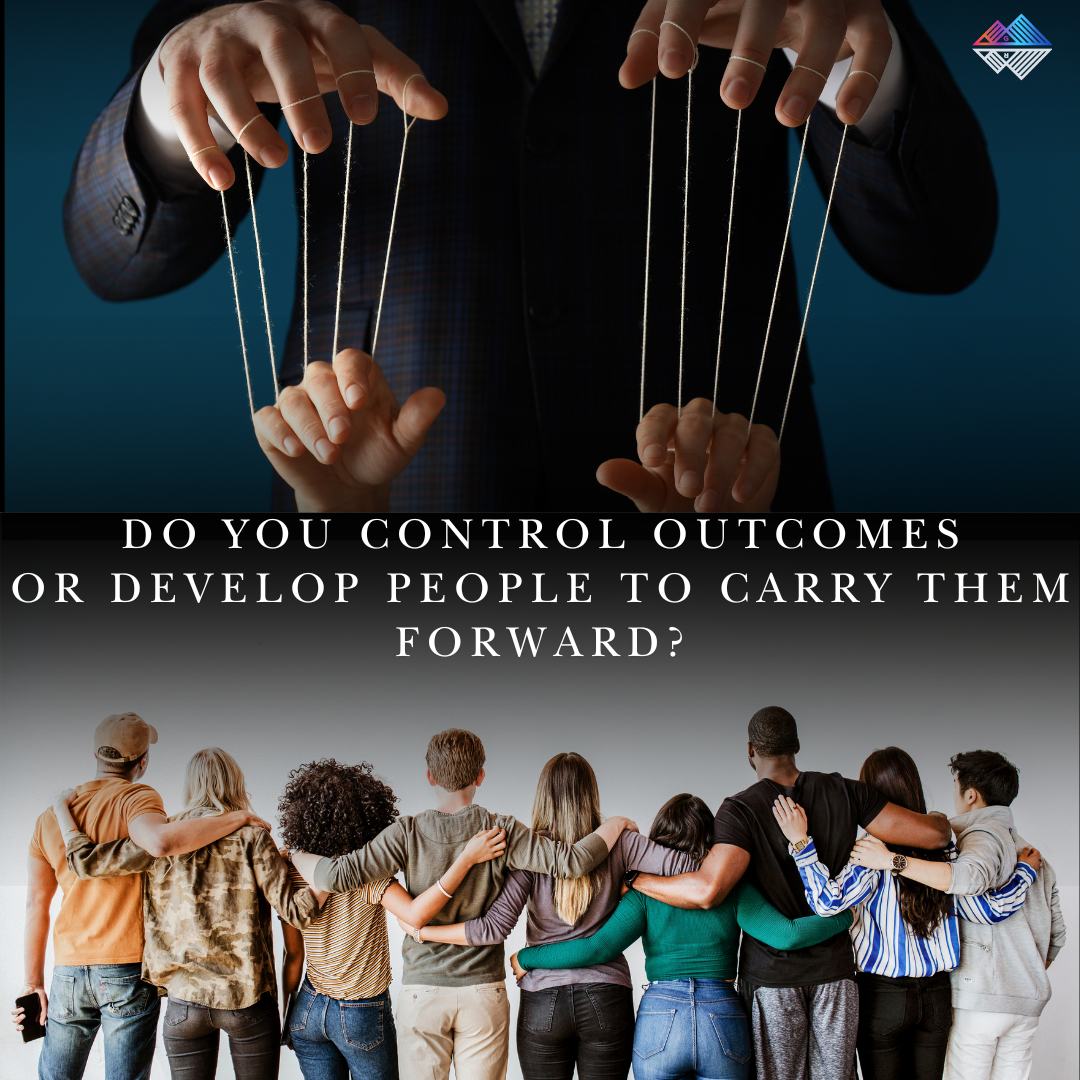
Are you focused on controlling outcomes—or on developing people who can carry them forward? Ch. 10
Our organization is built on strong, capable teams. At the center are our Superintendents and Project Managers, the ones who carry the responsibility of bringing each home to life. Around them is a dedicated support system: project accountants, project engineers, field technicians, and others whose work ensures every detail moves forward with precision and purpose.
This isn’t a theoretical responsibility, it’s real.. They own the timelines, uphold the standard of quality, coordinate trade partners, and serve as the front line in client relationships.
But a $60,000 mistake was made, and it wasn’t theirs. It was mine. I rushed the decision, bypassed the process, and moved faster than wisdom allowed.
And it cost us $60,000.
The number stung—not because it would bankrupt us, but because it was preventable. I knew better.
And the truth is, it wasn’t the first time.
“Rushing decisions may feel like leadership in the moment, but it often reveals a lack of trust in both the process and the people God has placed around you.”
— Jerry R. Meek
Making the impulsive decision felt like momentum. It felt like moving forward. In reality, it was impatience overriding discipline.
We placed the order, and I selected the right product number from the wrong manufacturer. When the paint was applied to the guest casita, it was not the selected color.
It was what I would later refer to as “Party Hat.” Bright pink. The mistake was visible, costly, and entirely avoidable.
Looking back, the issue wasn’t technical, it was the mirror. Rushing and bypassing the process. Trying to force progress instead of trusting the process.
“Speed without discipline will always cost more than patience with process.”
— Jerry R. Meek
Internally, I wrestled with more than process. Where was God in this? Was this a correction? Exposure? Consequence?
The easier narrative would have been to tighten control. To say, “From now on, I approve everything.” To reduce delegation. To centralize authority. Control feels safe.
Paul the Apostle challenges that instinct. He writes, “entrust to reliable people who will also be qualified to teach others.”
Entrusting others requires entrusting God. The deeper issue wasn’t processing failure. It was controlled.
I still wanted certainty. I still believed that if I moved fast enough, I could prevent mistakes. But faith is not control.
That $60,000 mistake became tuition.
It reinforced a lesson I had already been taught but clearly needed to learn more deeply: process exists for a reason, and people grow when they are trusted within it.
“Control may reduce mistakes in the short term, but it limits growth in the long term.”
— Jerry R. Meek
It also reminded me of something more important. God is present on the mountaintops and in the valleys. He operates in an economy larger than mine. And if I truly want to live in His economy, I must surrender the illusion of control.
Reflection
- Where am I rushing instead of trusting?
- Do I bypass the process when I feel pressure?
- Is my faith conditional on smooth outcomes?
Keep building, keep growing, and never settle,
-Jerry.

Application Business Leadership