
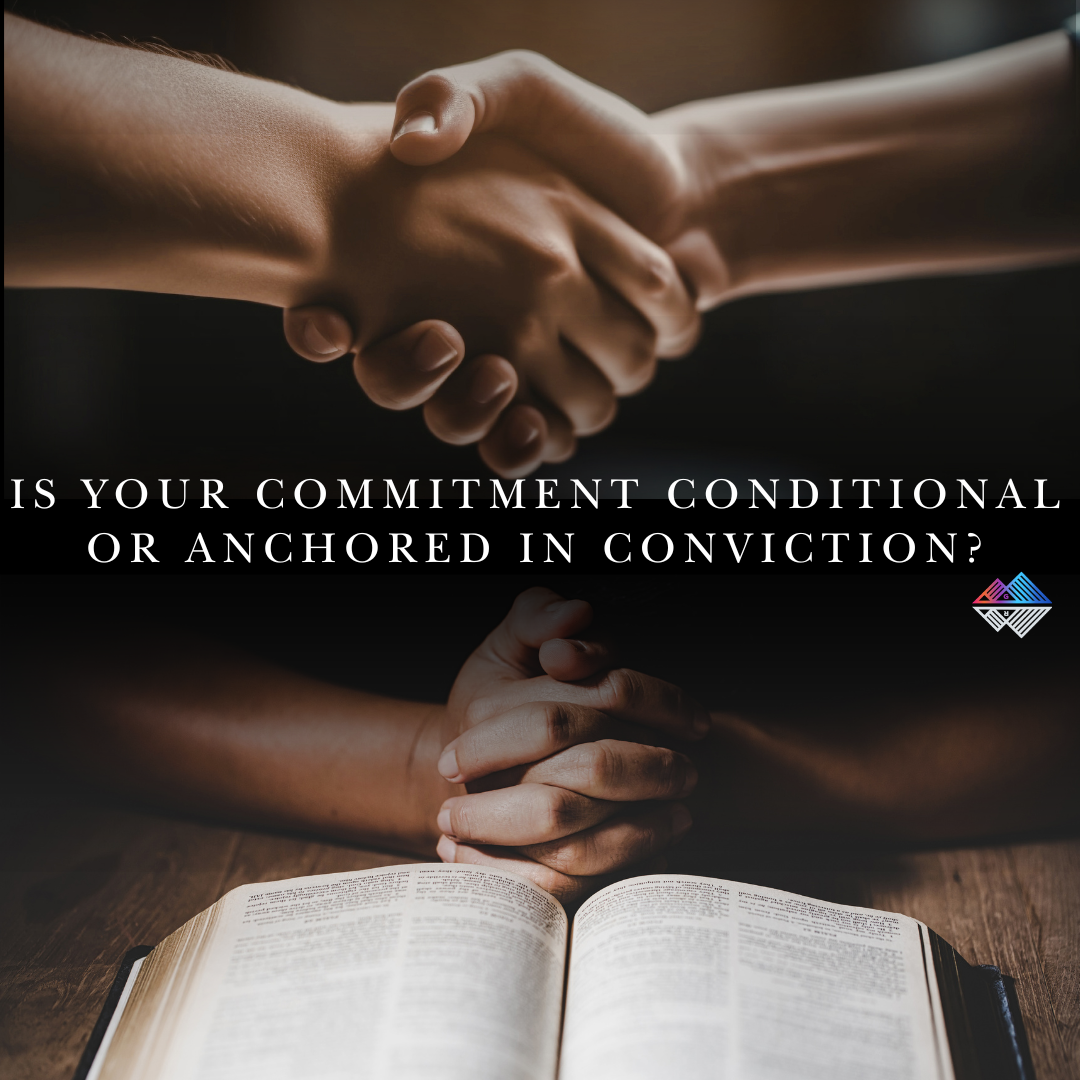
Turn Into the Storm Is your commitment conditional—or anchored in conviction? Ch.9
In the previous chapter, I shared the story of how our business lost $26 million in work, an event that impacted everything. The path forward became obvious, and the decisions we needed to make didn’t just affect the company, it affected everyone.
But what was not so obvious was how we would respond.
The magnitude of the situation unfolded gradually as the economy also unraveled. Projects disappeared, momentum reversed, and thirty-four years into my business, I found myself facing a question no leader ever wants to confront: Is this where the story ends?
The first call I made was to my father. At the time, it felt instinctive, but looking back, it carried more weight than I realized.
Fear started to set in, not just about solvency, but about the legacy. We had come too far to be stopped here.Beneath the external pressure, something quieter, but far more defining, was unfolding within me: would I respond out of fear, or out of faith?
But the defining moment of that season didn’t happen in a boardroom. It took shape in the commitment we chose to keep.
We had committed approximately $400,000 to build a fully operational commercial kitchen for the Phoenix Dream Center, a facility capable of serving up to 1 million meals a year to feed the homeless and survivors of human trafficking.
During the downturn, the founder and lead pastor asked me to lunch. With genuine understanding, they told me we did not have to honor the commitment. They knew what was happening in the economy. They wanted to release us from the obligation.
The door was open. And that is what made the decision so clear. I paused and responded, “I didn’t make the commitment to you. I made it to God.”
In that moment, the decision was not just about the commitment—it was about legacy. If I quit believing and walked away when things were tough, what example would I be setting for our sons to follow?
We chose to move forward.
We borrowed approximately $200,000 to complete the kitchen. It was not a strategy I would recommend broadly, but in that moment, it was obedience.
“Obedience is easy when it is convenient. It is transformative when it is costly.”
— Jerry R. Meek
Paul the Apostle reminds us to ‘stand your ground’ and to ‘be prepared—you’re up against far more than you can handle on your own.
Storms have a way of clarifying identity. They reveal whether commitments were conditional or conviction-driven. They expose whether generosity was strategic or truly surrendered.
“True leadership is revealed when pressure forces a decision—and conviction refuses to move.”
— Jerry R. Meek
We never considered running. And something happened that I did not expect. My faith grew.
It did not shrink under pressure—my faith was strengthened.
Looking back, the loss did not define that season. The response did. “As of 2025, 12,420,779 meals were served.”
We did not just survive the storm—we stepped into it, and God multiplied far beyond what we could see in the moment.
Reflection
- What commitment am I tempted to renegotiate when pressure increases?
- Is my obedience tied to comfort, or anchored in conviction?
- When the storm hits, do I step back—or do I turn into it?
Keep building, keep growing, and never settle,
-Jerry.

Application Business Leadership