
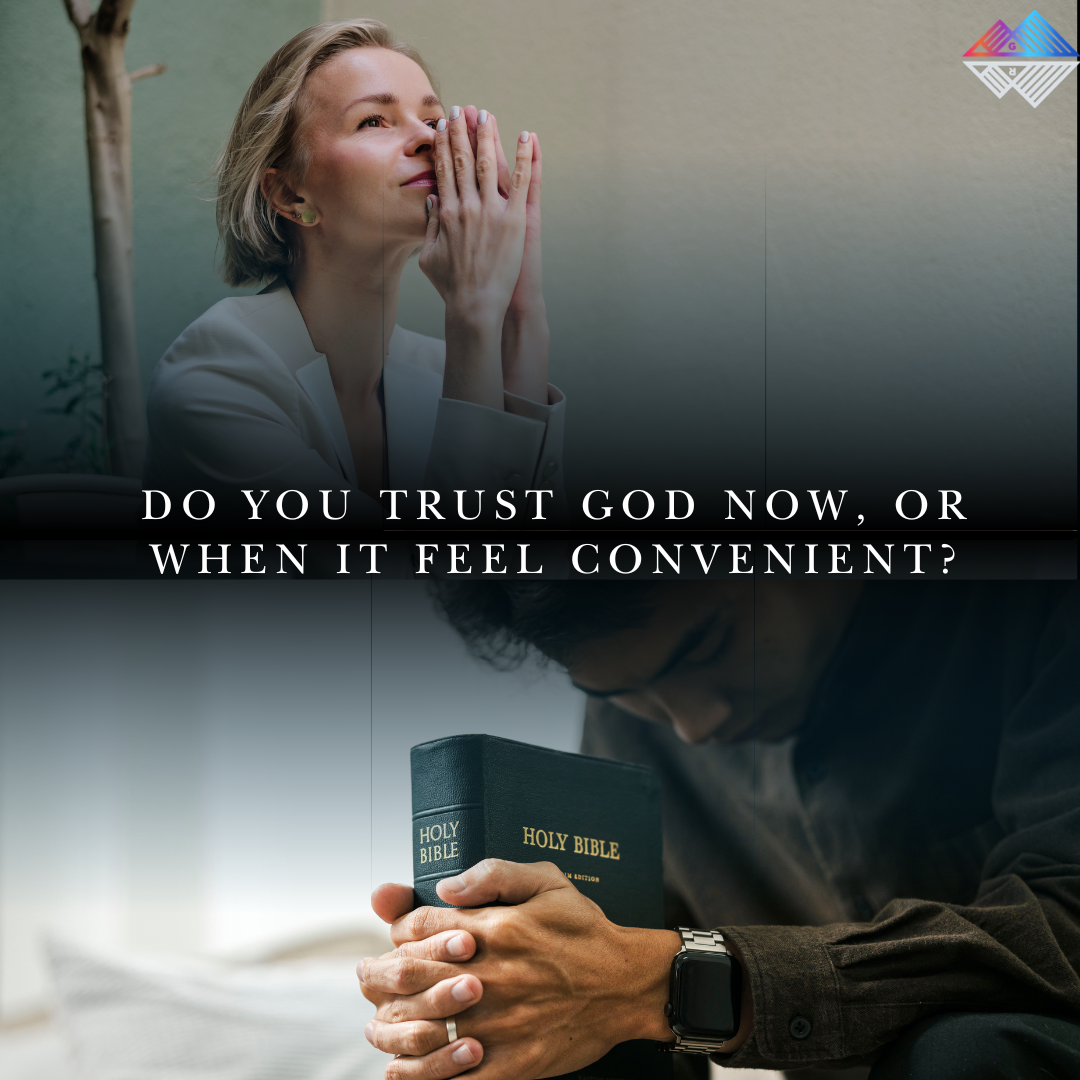
Do You Trust God With Little — or Wait Until it Feels Safe? Ch. 6
My first tithe check was $1.70.
Financially, it was insignificant. Spiritually, it was defining.
I remember those early years clearly. Nothing was extravagant—just steady responsibility and modest income. Every dollar had a purpose before it even arrived. There wasn’t margin, just careful management.
And when that’s your reality, generosity doesn’t feel natural. It feels… noticeable.
Because when resources are limited, something else starts speaking.
Protect yourself.
Build a cushion first.
Trust later—when things feel more secure.
It’s not loud or dramatic. It’s quiet. Practical. Even convincing.
The logic sounds responsible. In many ways, it is wise.
Which is why that moment mattered so much.
Because the tension wasn’t really about $1.70—it was about what I would choose to believe when things felt tight.
The real question wasn’t financial. It was whether I trusted God enough to practice generosity before it made sense.
But generosity has a way of exposing a deeper question: Who owns what we have?
Paul the Apostle writes that “God loves a cheerful giver.” That statement is not merely about money. It is about posture—about whether our lives reflect trust or control.
Money has a unique way of revealing what we believe.
If I see myself as the source, giving will always feel like loss. Releasing resources feels like watching something disappear. But if God is the source, then giving becomes an act of alignment rather than sacrifice.
That $1.70 check settled something early.
It was not just about generosity. It was about discipline.
In the same way integrity had to be decided when money was tight, generosity had to be decided there as well. Those small decisions were shaping both my character and my perspective.
That first check began training my heart to think differently about resources. Life was not simply about building something for myself. It was about recognizing that everything entrusted to me carried a responsibility to give back.
“Generosity is rarely a financial decision first. It is an ownership decision.”
— Jerry R. Meek
That small act quietly established a pattern.
As income and profit eventually grew, the focus did not change. The discipline formed when resources were limited continued when resources expanded. Giving was no longer a reaction to abundance—it was a habit formed in scarcity.
And that matters.
Because prosperity has a way of exposing what scarcity once trained.
If generosity is not settled early, abundance can easily replace gratitude with entitlement. But when trust is established in the lean years, prosperity becomes stewardship rather than possession.
“Discipline practiced when resources are small prepares the heart to
steward them when they are large.” — Jerry R. Meek
Looking back, the amount itself was insignificant.
But the decision was foundational.
Trust practiced in small moments often determines how we respond when the stakes grow larger.
Faith exercised in scarcity becomes protection in abundance.
Looking back, the amount was small, but the decision set the tone for how I would steward everything that followed.
Reflection
- Has ownership truly been settled in my heart, or do I still view resources as something I must protect first?
- When uncertainty increases, does my generosity expand in trust or shrink in fear?
Keep building, keep growing, and never settle,
-Jerry.

Application Business Leadership