
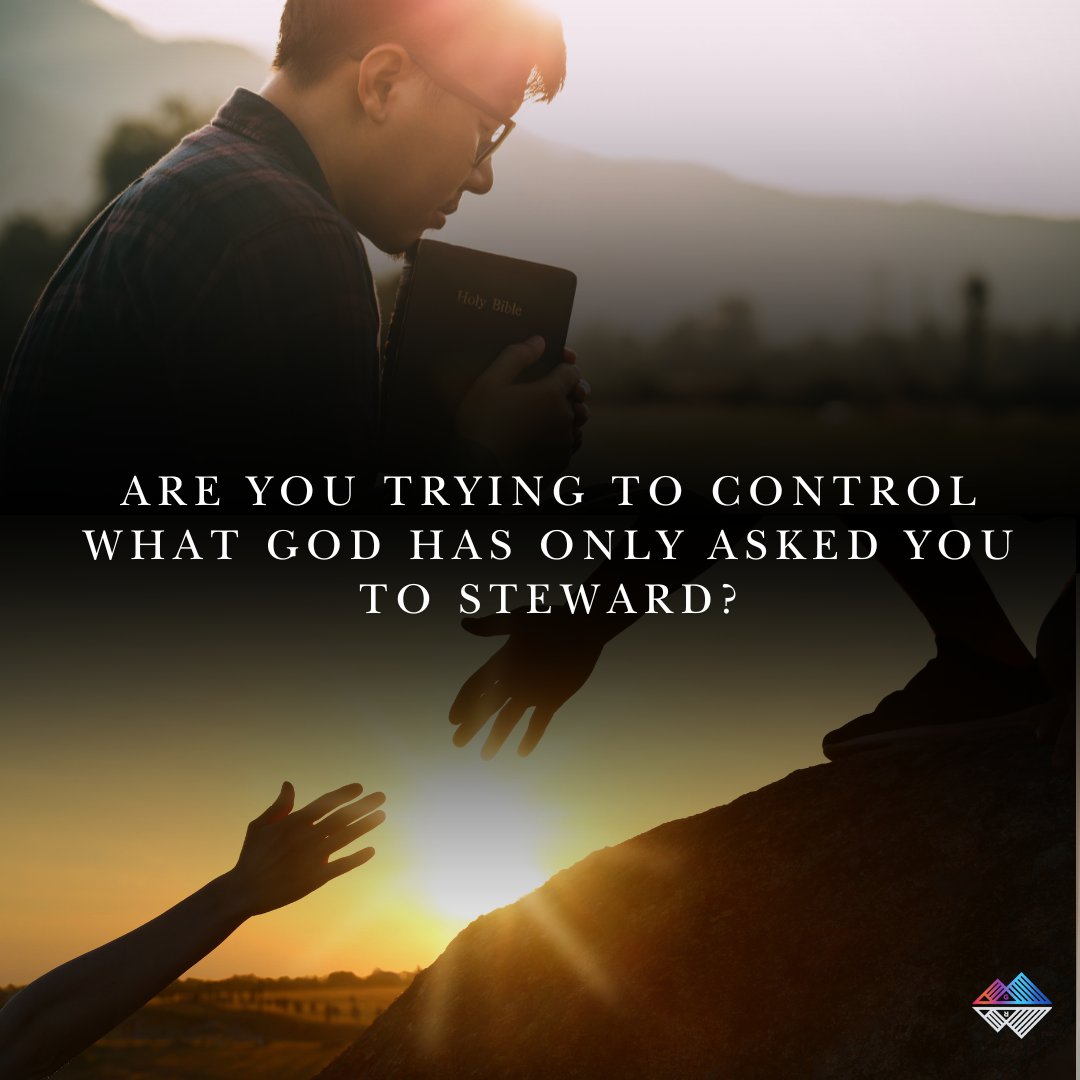
Are You Trying to Control What God Has Only Asked You to Steward? Ch. 21
| Ownership: It’s God’s Business Throughout my journey, I have come to understand that some of the greatest tests of leadership occur when faith and business collide. Pressure exposes what we trust. Loss challenges our sense of ownership. Success tests our humility. Uncertainty often reveals just how much we want to remain in control. There have been seasons when pressure increased, and my natural instinct was to tighten my grip—to manage outcomes more closely, protect what we had built, and make certain everything turned out the way I believed it should. That instinct can feel responsible. After all, leaders are expected to plan carefully, make wise decisions, protect the organization, and accept responsibility for results. But responsibility and control are not the same thing. Eventually, I had to confront a truth that changed the way I viewed leadership: I may have been entrusted with the responsibility to lead the business, but that did not make me its ultimate owner. God had entrusted it to me. My responsibility was to steward it faithfully. “Ownership creates pressure. Stewardship creates trust. When you remember whose business it is, you lead differently.” — Jerry R. Meek Ownership says, I have to make this work. Stewardship says, I have to faithfully manage what God has entrusted to me. Ownership can tempt us to believe every outcome depends on our ability to control it. Stewardship requires us to plan wisely, work diligently, make difficult decisions, and pursue excellence while recognizing that the outcome is not completely ours to control. That does not mean becoming passive. Faith is not an excuse for poor planning, weak leadership, or avoiding difficult decisions. If God has entrusted something to us, we should care for it with excellence. We should lead courageously, develop people, make wise decisions, and give our very best to the work before us. Paul the Apostle said, “Whatever you do, work at it with all your heart, as working for the Lord, not for human masters.” That Scripture changes the audience for our work. We are not ultimately working for recognition, approval, status, or even financial success. We are working for Him. When that becomes real, the question changes from “Did I achieve the outcome I wanted?” to “Was I faithful with what God entrusted to me?” Business naturally teaches us to measure results. Revenue matters. Profitability matters. Growth and performance matter. We should measure them, understand them, and accept responsibility for them. But none of those measurements can completely define whether we have led faithfully. Sometimes you can make the right decision and still experience a disappointing outcome. You can lead with integrity and lose an opportunity. You can prepare carefully and encounter circumstances you could never have anticipated. That is where stewardship becomes more than a leadership principle. It becomes an act of faith. “Faithful leadership does everything within its responsibility—and trusts God with everything beyond its control.” — Jerry R. Meek For leaders accustomed to solving problems and producing results, that can be difficult. We are rewarded for taking responsibility, anticipating problems, and making things happen. Those are valuable qualities until responsibility quietly becomes control and control begins replacing trust. I have had to learn that surrendering the outcome does not mean surrendering my responsibility. I am responsible for preparation, effort, integrity, courage, and obedience. But I am not responsible for controlling every circumstance or guaranteeing every result. God has never asked me to carry that burden. There is tremendous freedom in understanding the difference. When you believe everything belongs to you, every threat becomes personal and every uncertain outcome becomes something you feel compelled to control. But when you understand yourself as a steward, you can carry responsibility seriously without carrying it fearfully. You can work with excellence without believing everything depends on you. The goal was never simply to build successfully. It was to build faithfully. Success is something we naturally desire, and there is nothing wrong with pursuing it. But success cannot become the final measure of our obedience. Sometimes faithfulness produces visible success. Sometimes faithfulness requires doing what is right even when the immediate result appears costly. The question is not simply, “Did it work?” The deeper question is, “Was I faithful?” “The business may be in your hands, but it was never meant to take God’s place in your heart.” — Jerry R. Meek The longer I lead, the more I understand that stewardship is not about caring less about the business. It is about caring for it from the proper perspective. Lead it well. Protect it wisely. Build it courageously. Pursue excellence. Accept responsibility. But never confuse being entrusted with something with owning it. When pressure rises and outcomes become uncertain, remember whose business it really is. Do everything God has entrusted you to do, and then trust Him with what you cannot control. That is not weakness. That is stewardship. |
Keep building, keep growing, and never settle,
-Jerry.
REFLECTION
- When am I still trying to control something God has asked me to faithfully steward?
- Who is the true audience of my work, and does the way I lead reflect that?
- What would change in my leadership if I measured success by faithfulness as well as results?

Application Business Leadership